3 December 2025
Artist, photographer, and camera builder Pete Swann gave both a history lesson and hands-on experience at Photography Society
Arranged by the pupils-in-charge of PhotoSoc (and amateur photographers), Dante (Sixth Form, AHH) and Lucas (Sixth Form, BB), Pete Swann’s talk amalgamated art and science, giving great detail on the history of photographic processes and allowing pupils a rare chance to view some remarkable artefacts.
Looking at photography’s transformation from a scientific curiosity to a societal and cultural norm, Pete first looked at Nicéphore Niépce’s heliography – images created using bitumen of Judea on a pewter plate – and moved on to the Daguerreotype, Louis Daguerre’s process that produced detailed positive images on silver plated copper plates. He then described William Henry Fox Talbot’s salt prints, a breakthrough that laid the foundation for the negative positive process at the heart of modern photography. The portrait lens of the 1840s dramatically reduced exposure times, paving the way for photography’s commercial viability. And in 1888, photography was finally popularised with the launch of the first Kodak, a simple box with a fixed-focus lens. Affordable and easy to use, it introduced the art form to the masses.
The evolution of photography was further made clear when Pete described earlier processes requiring long exposures in strong sunlight due to an ISO equivalent of 1 or lower and tiny apertures. By contrast, modern digital cameras can reach ISO 32,000 or more. Yet the sharpness of the earlier prints, once developed, could be impeccable, and the thought and time taken to form each composition meant that every print was like a piece of art in itself. To bring the story to life, Pete showcased a selection of cameras and photographs that reflected the development of photography throughout the 19th century.
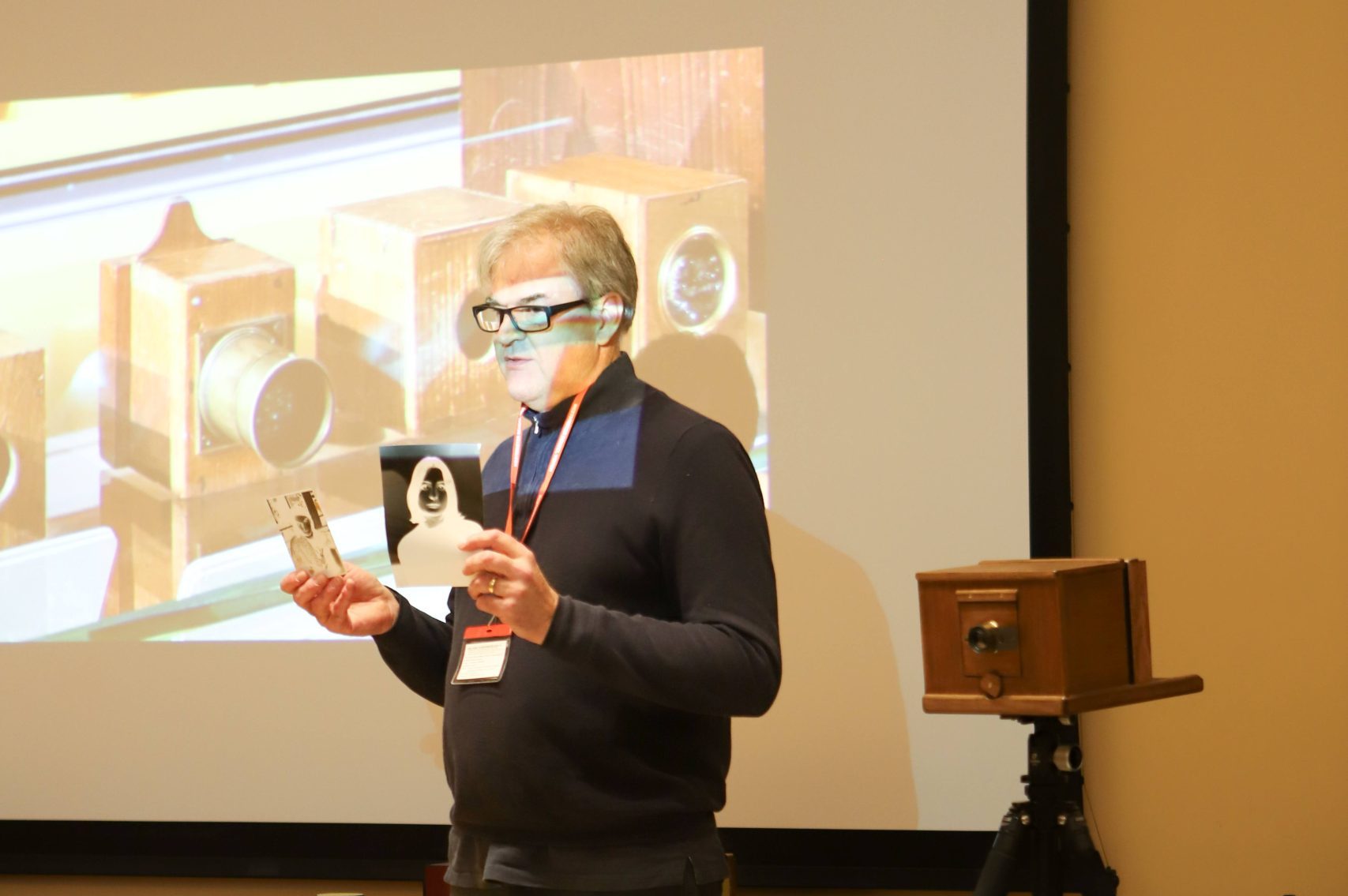
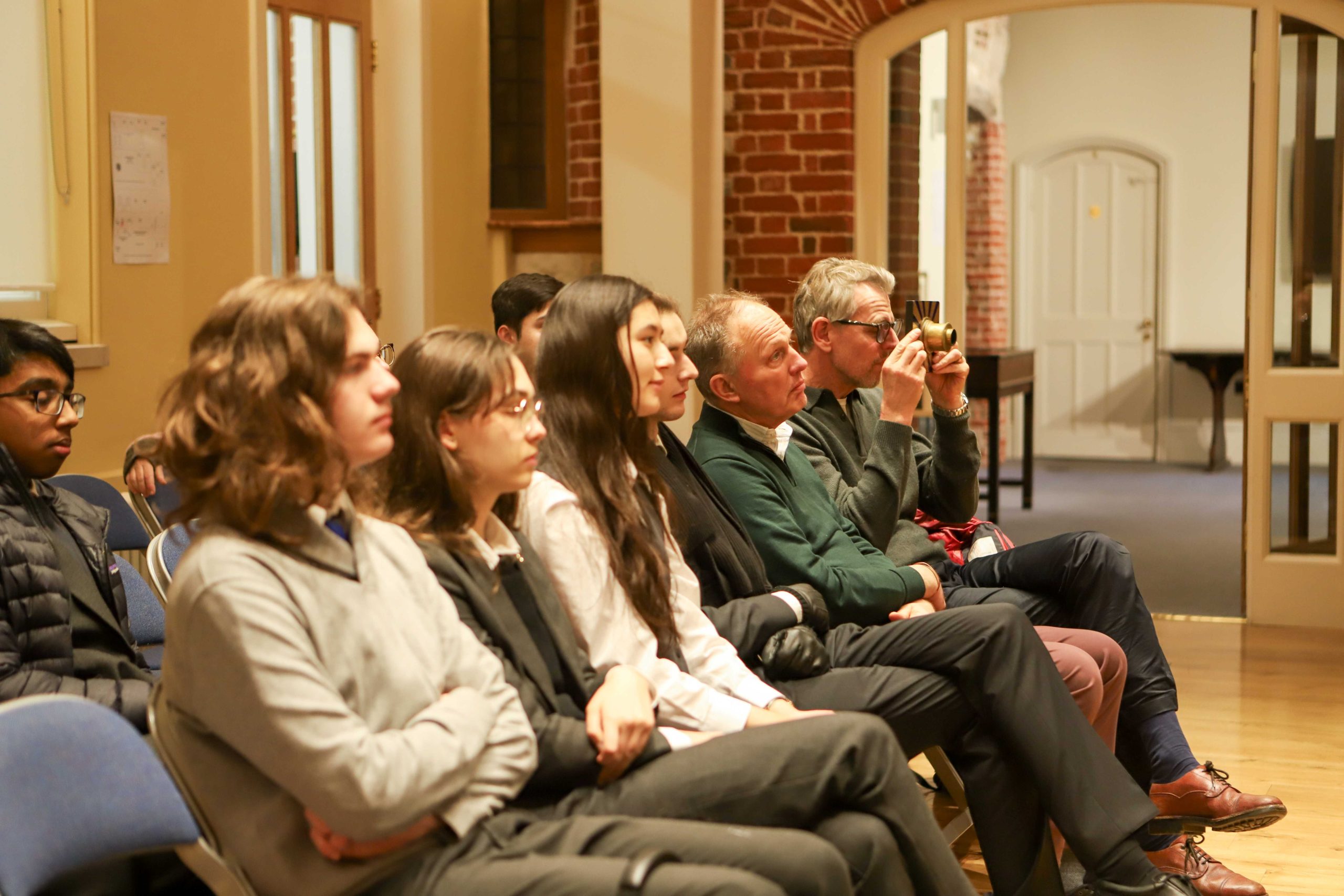
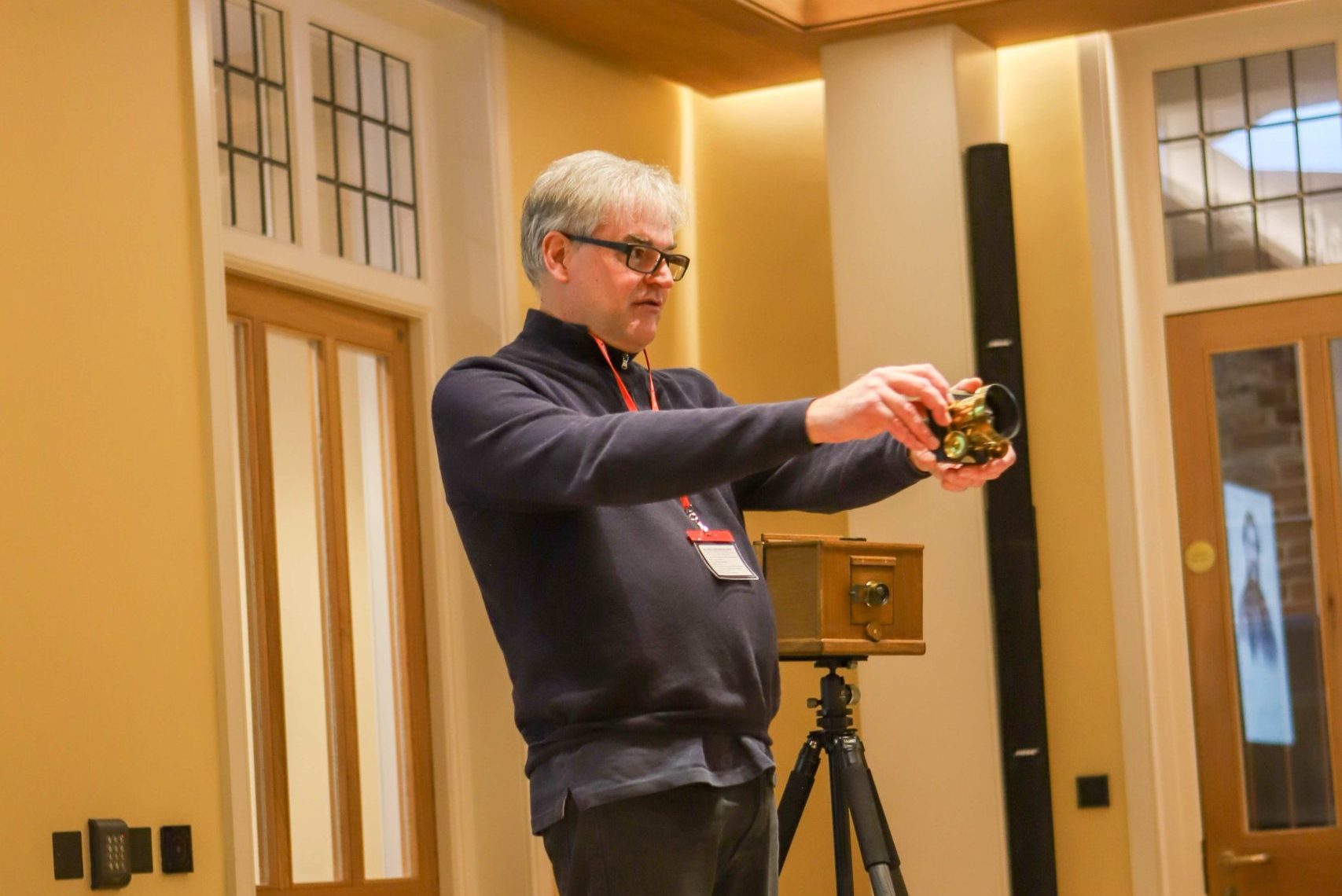
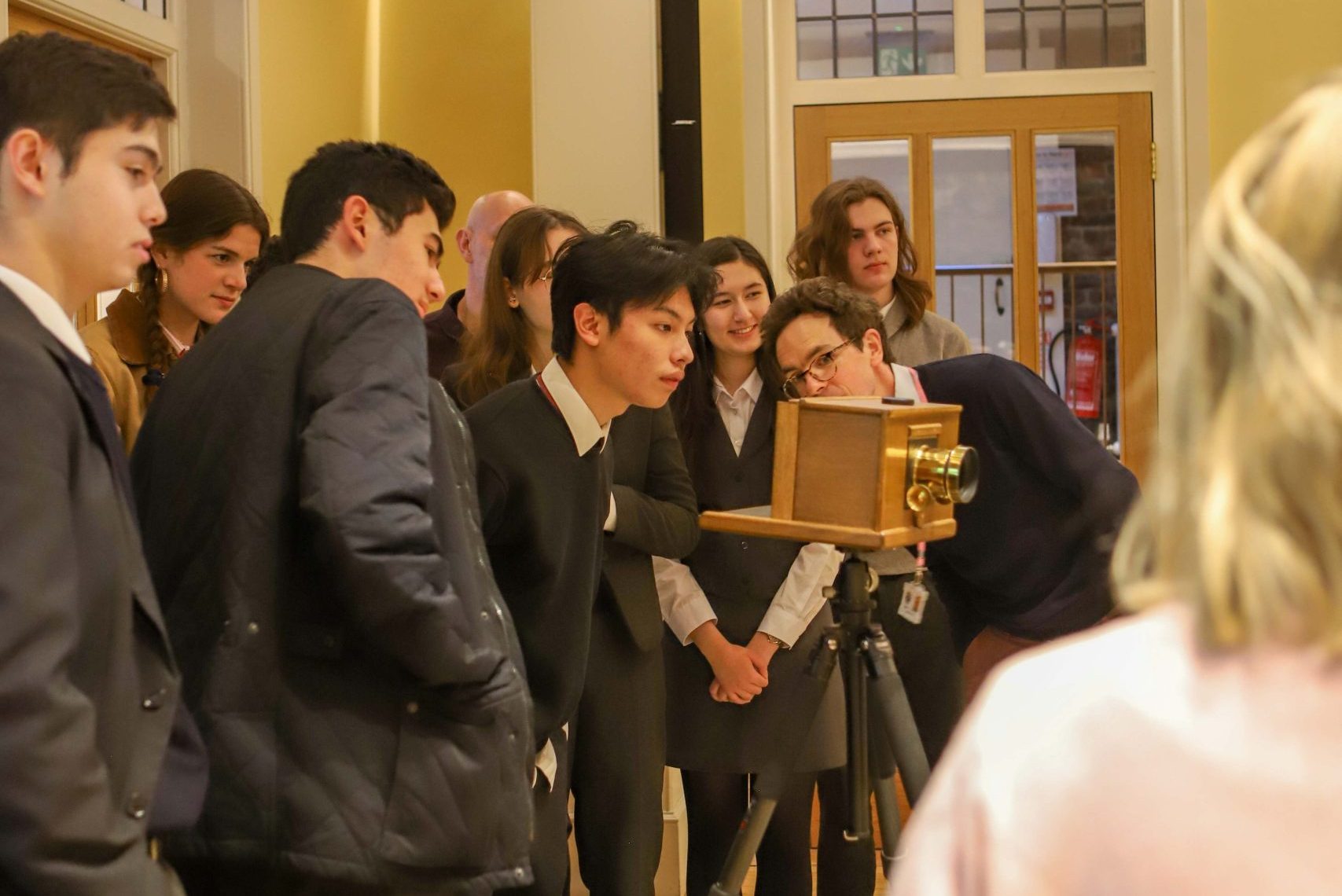
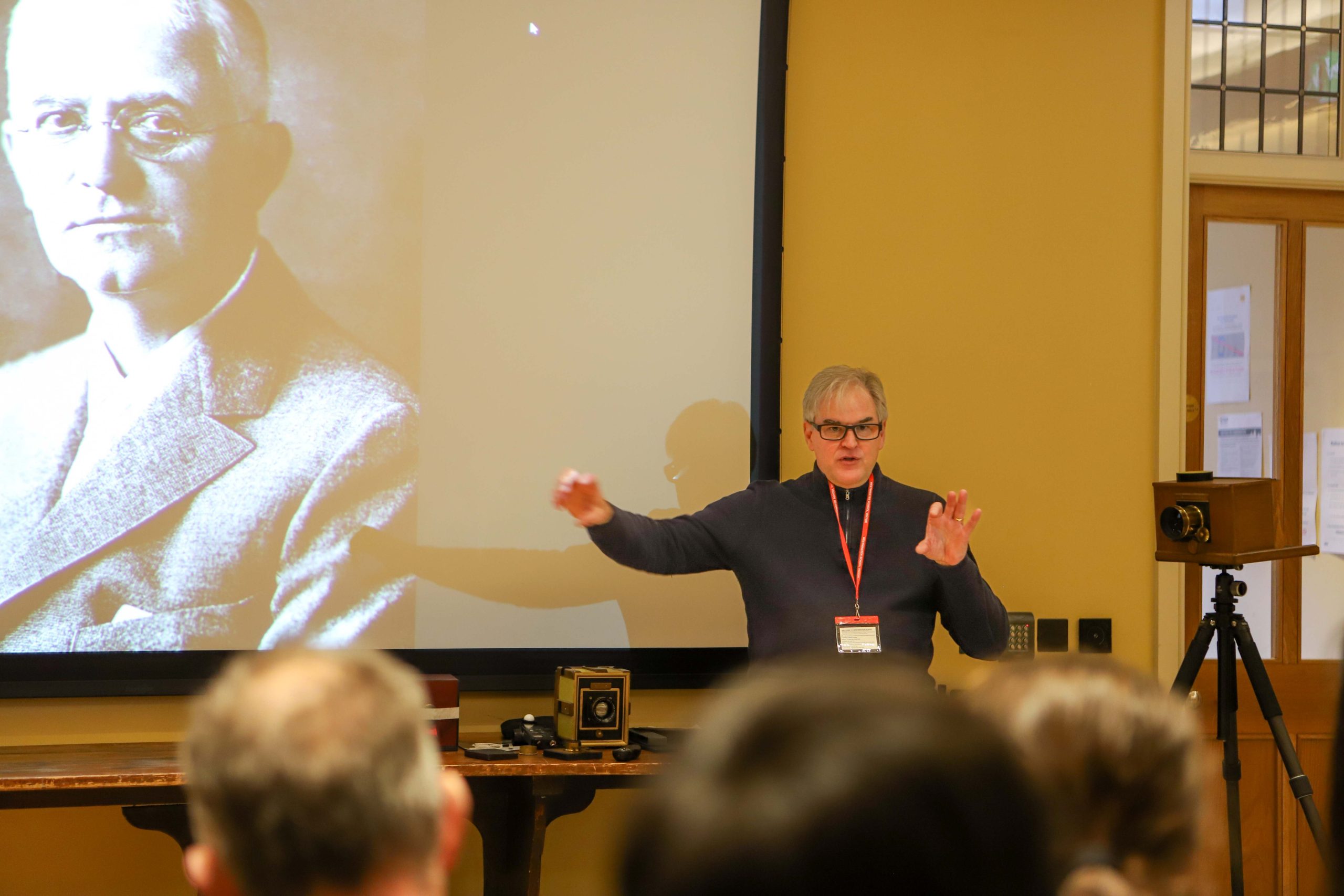
Dante said: “Pete offered us a unique opportunity to explore a range of rare photographic techniques. The genuine tintype and daguerreotype examples he brought in gave us a hands-on experience of the technologies he spoke about, transforming his presentation into a historical photographic journey and leading to a deeper understanding and appreciation of early practices. His approach not only highlighted the importance of these techniques in the development of modern photography, but also interwove the underlying chemical processes involved, providing a well-rounded exploration of 19th century photography.”
Lucas said: “On top of a compelling talk, Pete took a picture of the audience with an antique box camera, allowing us to appreciate the complexity of early photographic processes. Faced with adverse light conditions, he demonstrated revolutionary impact of the first mathematically calculated photographic lens, the Petzval, which reduced exposure time from 120 to 4 seconds (saving us from having to sit still for a very long time!). Pete’s talk was a resounding success, and we are ever grateful for his time.”
Related News Stories