20 January 2026
Art historian Andrew Graham-Dixon explores Vermeer’s images of women and quiet activism at Westminster Locke Lecture
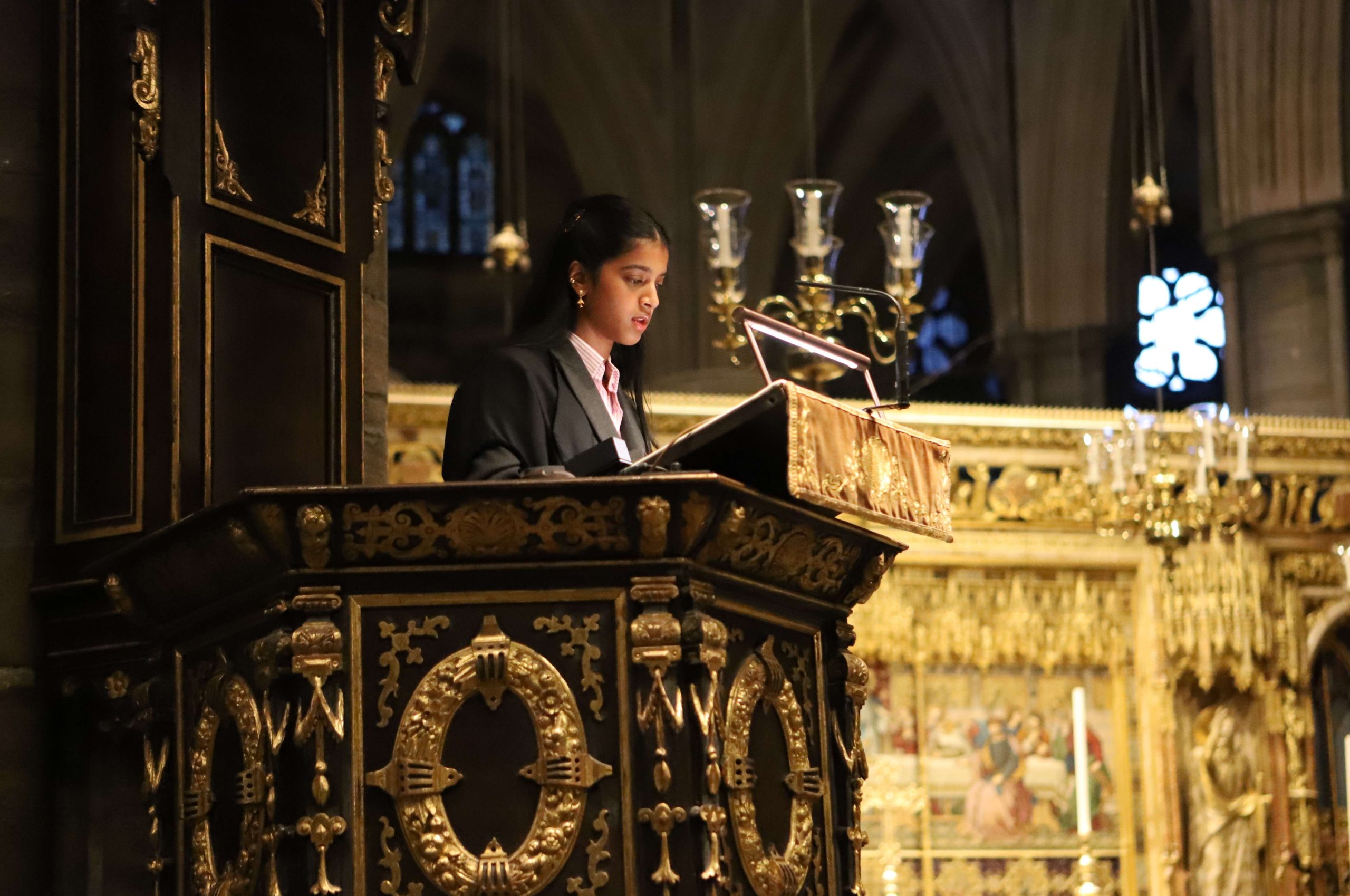
In an impassioned talk to sixth form pupils in January, eminent art critic, historian and broadcaster, Andrew Graham-Dixon OW, offered a fresh perspective on Johannes Vermeer, arguing that the painter’s images of women carry moral and spiritual purpose, rather than presenting them as objects of male admiration.
Graham-Dixon drew on new archival research to place Vermeer within the unconventional religious world of two of his key patrons, Maria de Knuijt and Pieter van Ruijven. Both were associated with the Collegiants, a radical Protestant group that rejected formal church structures, encouraged open discussion, and promoted religious tolerance and unexpectedly progressive views on women for the time. He also highlighted their links to the Remonstrants, another movement committed to freedom of conscience and open theological debate.
One of Graham-Dixon’s most striking suggestions, developed in his new book, is that the sitter in Girl with a Pearl Earring may have been Magdalena de Knuijt, Maria’s daughter. He proposes that the painting reflects Collegiant ideas and subtly references Mary Magdalene, presenting the image as an affirmation of women’s worth.
He also made a compelling connection to John Locke, noting that Locke — a pupil at Westminster School in the mid-1600s — lived in the Netherlands during Vermeer’s lifetime and moved within similar religious and intellectual circles. These influences, he argues, helped shape Locke’s Letter Concerning Toleration, which later informed theories of natural rights, equality, and the principles that underpin the Universal Declaration of Human Rights. Another of Vermeer’s patrons, Adriaen Paets, belonged to the same networks and played his own understated role in promoting ideas of tolerance within the Dutch Republic.
The lecture encouraged students to consider the political and ethical power of art, and how creative work can act as a catalyst for open-mindedness and social change. Graham-Dixon also vividly evoked the atmosphere of the Netherlands in the 1690s, describing the clandestine gatherings of artists, thinkers, and reformers whose ideas helped transform European thought.
The talk with such a focus on women, comes as Westminster School continues its move to full co-education, welcoming girls at 4+, 11+ and 13+ as well as 16+ from 2026.





Vita (Remove, DD) said: “Andrew was such a captivating and passionate speaker! Going from knowing only basics about Vermeer to having all of my preconceptions turned on their head, it was fascinating to learn about the Dutch Remonstrants and the progressive groups of women working together in hidden churches to help the less fortunate, which Andrew showed evidence for in Vermeer’s paintings. Andrew’s thorough research process in discovering this ‘final piece of the jigsaw’ on such a previously mysterious artist was also incredible to understand.”
The School’s John Locke Lecture Series reflects Westminster School’s commitment to intellectual curiosity, rigorous debate, and preparing pupils for leadership in a global society. Designed to foster critical thinking and academic excellence, it takes the place of lessons in autumn and spring, complementing the intellectual life of Year 12 boys and girls. Its frequency means that pupils are exposed to a wide range of prominent speakers — like having multiple speech days each year.
Related News Stories