by Dr Elizabeth Wells, Archivist, Westminster School
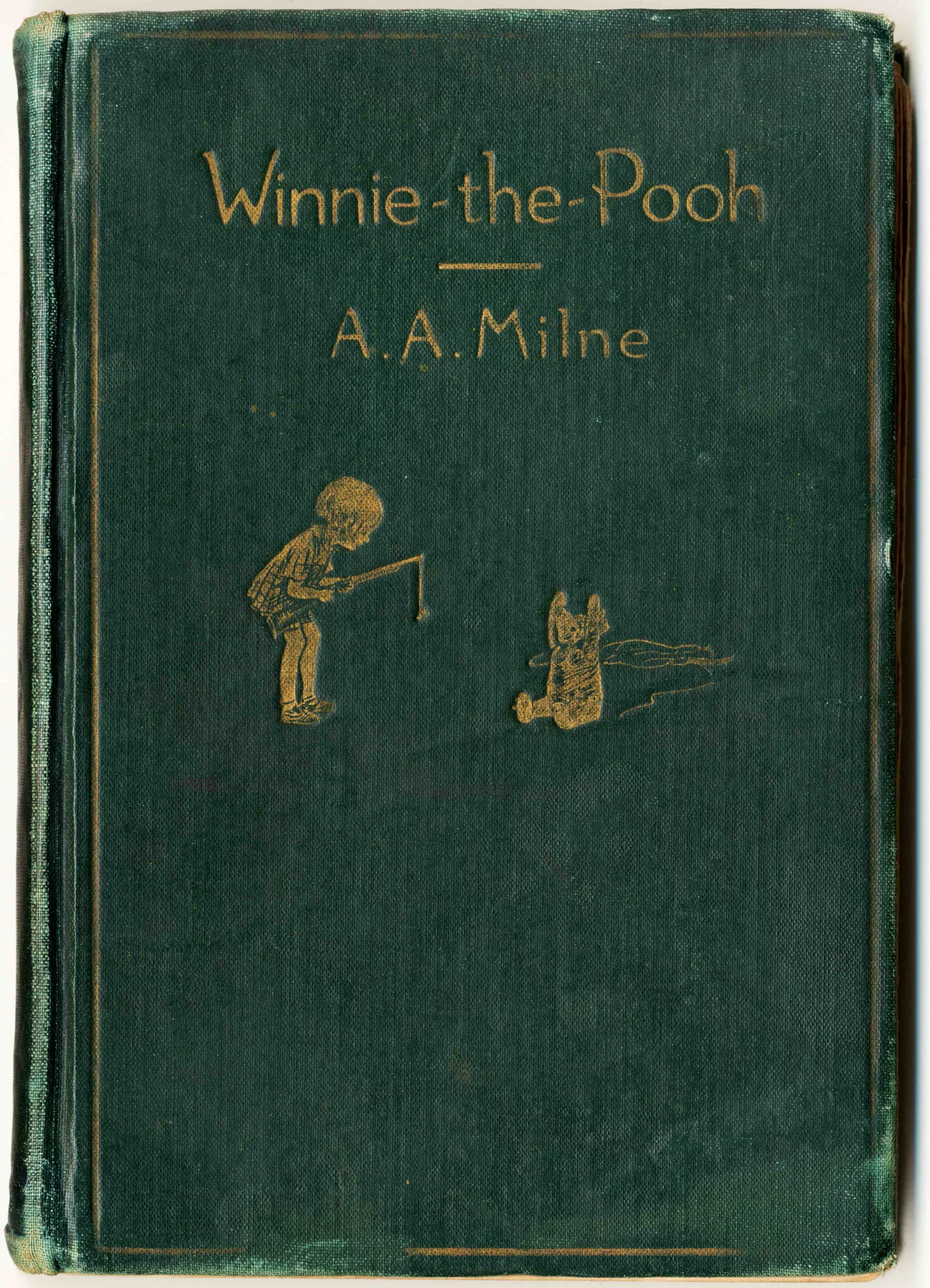
2026 marks two important anniversaries – 70 years since the death of A A Milne and 100 years since the publication of Winnie-the-Pooh.
Milne is a special figure for Westminster School. His generosity as a benefactor brought desperately needed financial stability after a precarious time during and immediately after World War Two. Following the production of the Winnie-the-Pooh films by Disney in the 1960s and 1970s, with their accompanying merchandise, this already substantial gift became particularly valuable. The school chose to recognise his benefaction by naming a house after Milne in 1997, and a room in the library also bears his name.
But what of Milne’s time as a pupil? Alan Alexander Milne entered Westminster School as a Queen’s Scholar in 1893. His older brother, Kenneth, had sat the Challenge a little earlier that year and had also won a place as a Queen’s Scholar. They had previously attended Henley House, a small preparatory school in Kilburn run by their father. Amongst the staff was the author H G Wells who taught the young Milne in 1889-90. Milne’s exceptional mathematical ability made him one of the youngest members of College in its history, sitting the Challenge aged just 11 years and 2 months.
Although Westminster would grow on him, Milne initially disliked his new school: the masters and elder boys were strict, the meals were abominable and it was difficult to study the subjects he liked most. Milne was discouraged from doing mathematics by a report shortly after his arrival that judged him unfairly as an idle pupil based on results in classics (the core of the school’s curriculum at that time).
However, Milne came to enjoy many elements of Westminster life and would ultimately look back upon the school fondly, leaving it (along with his family, the Royal Literary Fund and the Garrick Club) the rights to his Pooh books in his will. He particularly relished spending time in the library, where he retreated almost every Sunday. As long as weekend boarders attended the two compulsory Sunday Abbey services no one minded what they did all day, and Milne read to his heart’s content.
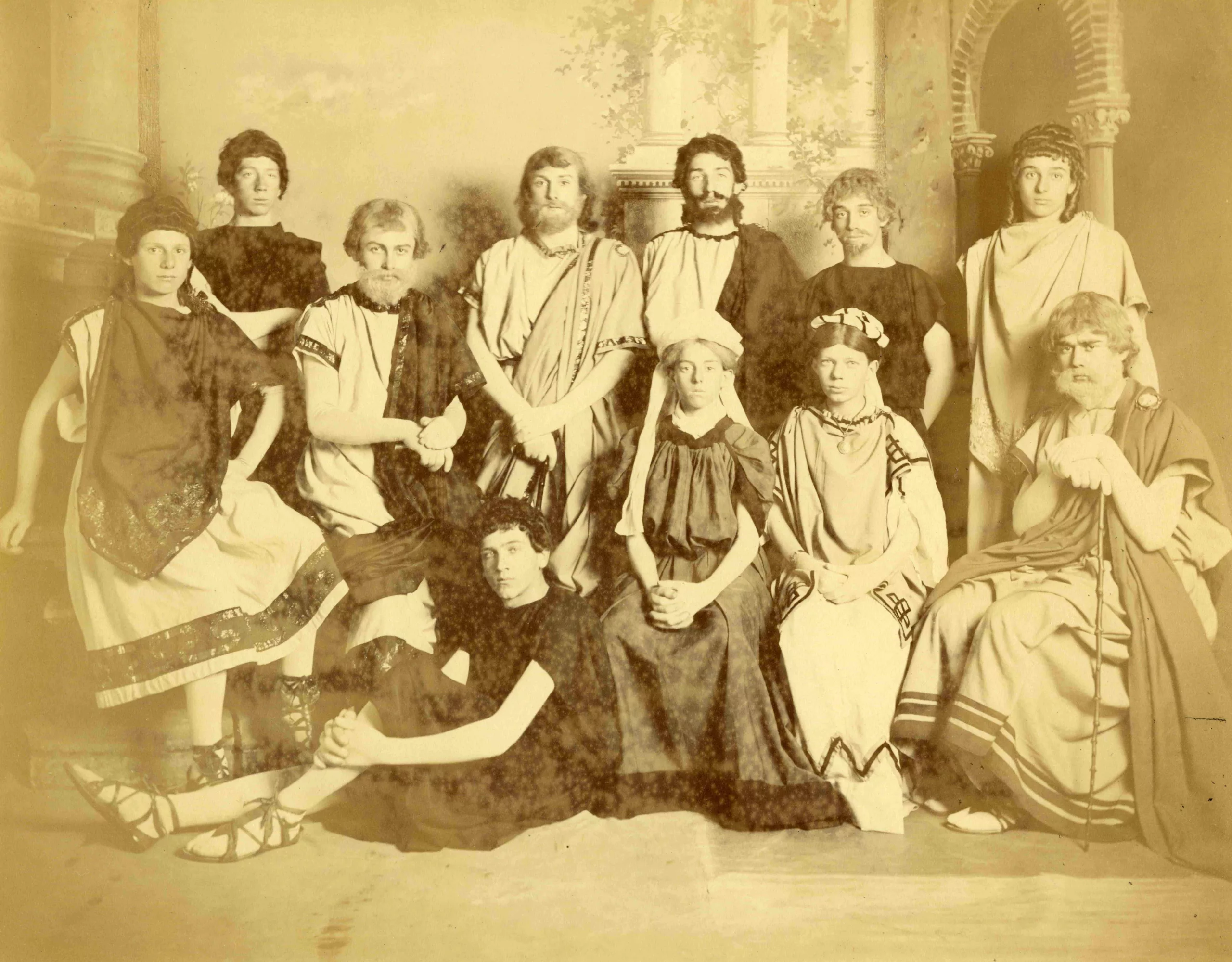
The school’s records show him honing the skills that would later support his career. He was secretary of the school’s Literary Society, which met in the evening to read plays aloud for entertainment. He had a chance to perform on stage, taking on the role of Geta in Terence’s Adelphi in the school’s annual Latin Play. It was performed over several nights shortly before Christmas in 1899 in front of a large audience including journalists who reported on the production for The Times.
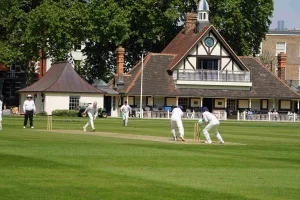
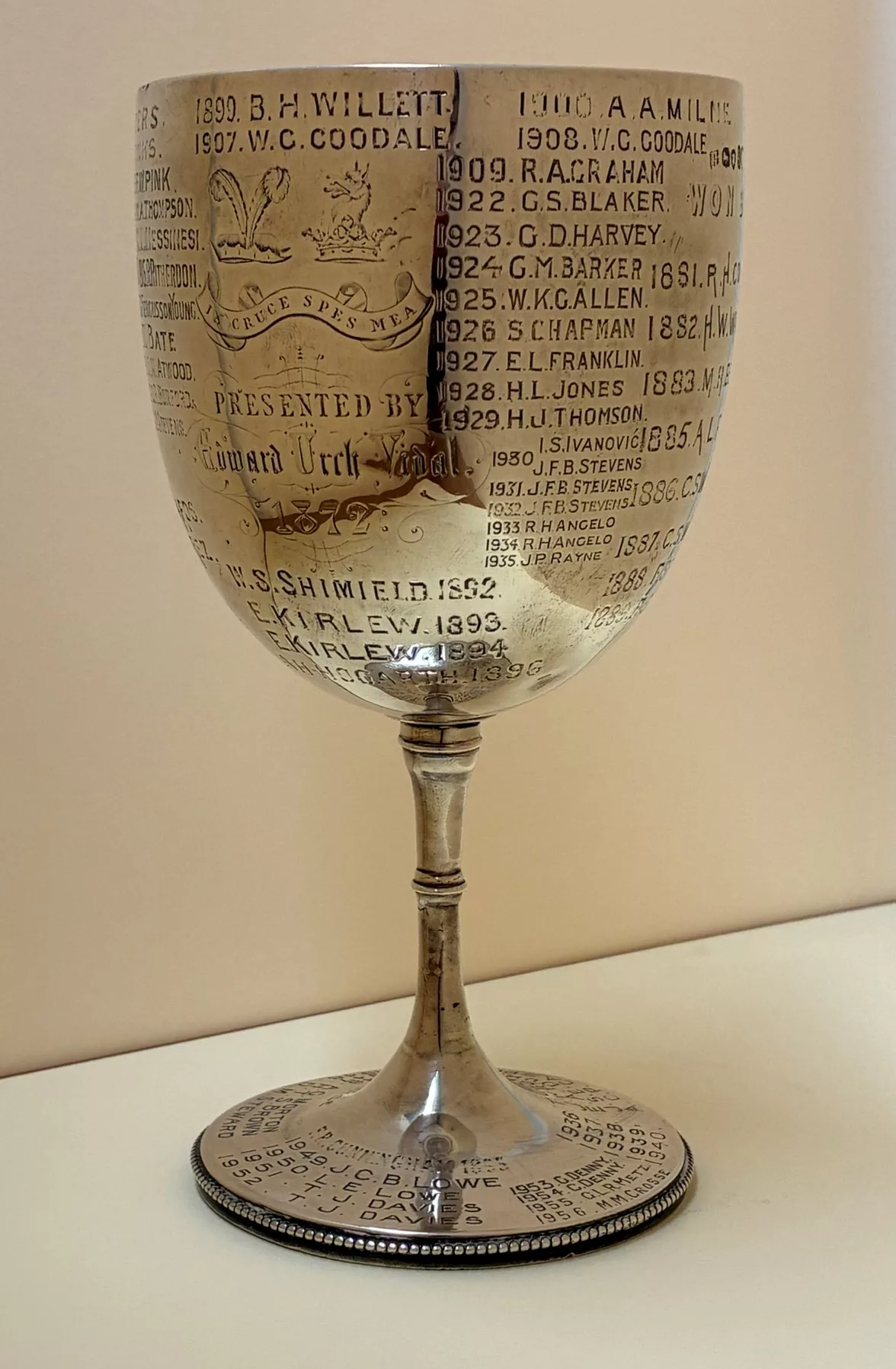
Milne also took an active role in the school’s Debating Society, speaking for and against a variety of motions including one concerning the rules of cricket, a game he remained passionate about for the rest of his life. Milne played frequently for the School XI and particularly excelled as a bowler. He was athletic and we still have the trophy for the Long Jump competition engraved with his name after he won in 1900 with a jump of nearly 20ft.
The twin loves of literature and mathematics never left him and he went on to study mathematics on a scholarship at Trinity College, Cambridge. Whilst there he started writing for the student magazine, ultimately acting as editor. He graduated in 1903 and embarked upon an almost continuous literary career for the rest of his life. By 1904 he had managed to get his first piece, a short comic story, accepted in Punch magazine and by 1910 he had written enough to publish a collection of his articles, The Day’s Play, which sold well and was reviewed favourably.
Milne’s burgeoning literary career was interrupted by World War One. He did not initially volunteer, being of strong pacifist convictions, but in 1915 he volunteered and was commissioned into the Warwickshire regiment. He saw action at the Somme in 1916 and was appalled by this experience of trench warfare. Like many of his generation, he emerged from the war questioning not only its purpose but the broader assumptions about honour and duty that had sustained it.
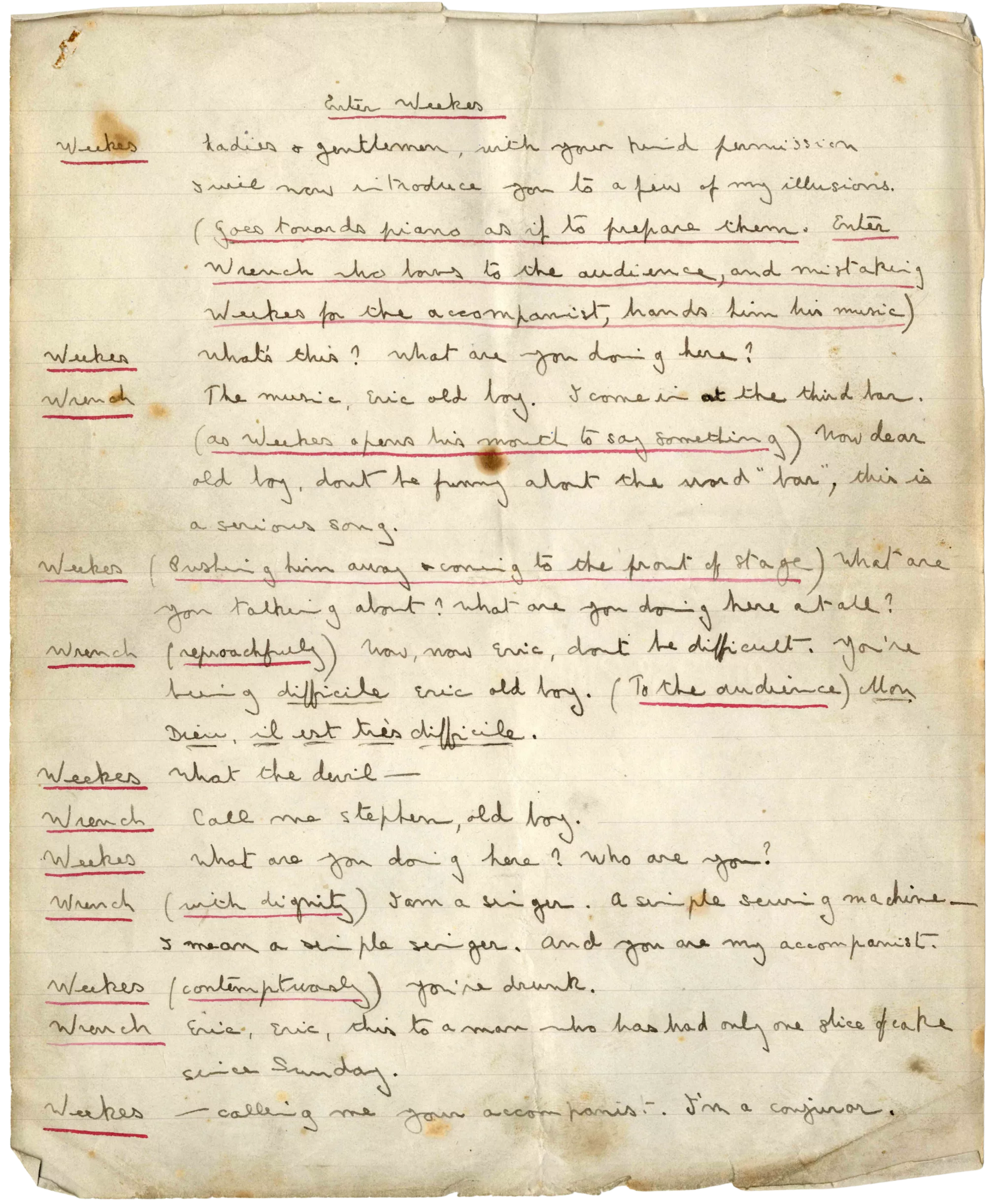
Milne was invalided out of the army by November 1916 with trench fever and spent the last years of the war in a desk job with military intelligence. The school is fortunate to have the manuscript of a short comic dialogue he wrote in 1917, dedicated to one of the soldiers with whom he had served at the front, Private H J Wrench. Wrench had been a music hall performer prior to the war and Milne’s sketch revolved around a singer disrupting a conjuror’s tricks on stage with entertaining results.
Unpublished and almost certainly never performed, we will be staging the sketch for the very first time in 2026, in a performance at the Garrick Club.
Following the war, Milne achieved notoriety as a playwright and this remained the form of writing he found the most stimulating. His works are rarely performed now, but were extremely successful at the time – by 1924 the amateur rights alone were bringing in £2,000 a year. This income helped him to buy Cotchford Farm on the edge of Ashdown Forest, which would become the setting for his most enduring and successful work, Winnie-the-Pooh. The school is fortunate enough to have a copy which was gifted by the author and bears his handwritten dedication.
Milne’s pacifism found its voice in 1934 in his book Peace with Honour, where, in the context of rising tensions in Europe he argued that nations should prioritise compromise over destructive conflict. However, by the outbreak of World War Two Milne’s views had evolved. In 1940 he published a corrective, War with Honour, in which he acknowledged that fighting against tyranny in defence of fundamental freedoms could be morally justified.
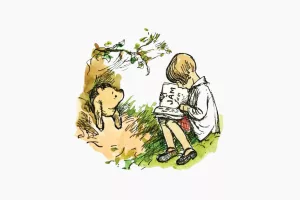
As Milne aged, his four children’s books grew more and more successful, being adapted and translated into numerous languages. Towards the end of his life he reflected:
When I wrote them little thinking
All my years of pen-and-inking
Would be almost lost among
Those four trifles for the young.
It is undoubtedly true that these books were a source of some sadness for Milne, overshadowing his other work and at times putting a strain on his relationship with his son, Christopher Robin. Nevertheless, in his final book, Year in, Year out, he demonstrated that he had come to accept the works and draw pleasure from the enjoyment they brought to so many readers.