Westminster School News OWW News
To celebrate the 100th birthday of Winnie-the-Pooh, the School house named after A A Milne hosted a special dinner, at which guest speaker, the author Naomi Ishiguro OW, reflected on the ideas and opportunities both her and Milne will have encountered at Westminster.
When I was figuring out what to say this evening, Rob Morgan, Milne’s current housemaster, asked me: “Did being in Milne’s house, or indeed at Westminster, influence my becoming a writer?”
The answer is definitely yes, but exactly how and in what way is a curious thing to consider, and made me go back to reflecting on just what kind of education it is that Westminster really offers its pupils, and what kind of place it is, in terms of character and ethos.
Obviously some things will have changed since A A Milne’s time at the school, from 1893 to 1900. Still, institutions have a way of holding onto personalities, and given Milne is the abiding spirit, even friendly ghost, of this evening, I thought that instead of thinking about me, I’d first go back and see what Milne himself has to say about to what extent he thinks his time at Westminster influenced his becoming a writer. Writing about his time at the school in his autobiography, It’s Too Late Now, Milne says:
“Looking back on it, I should say that tolerance was Westminster’s great quality. Her ways were conventional, but you need not conform to them… It was for you to find yourself, and for her to let you find yourself.”
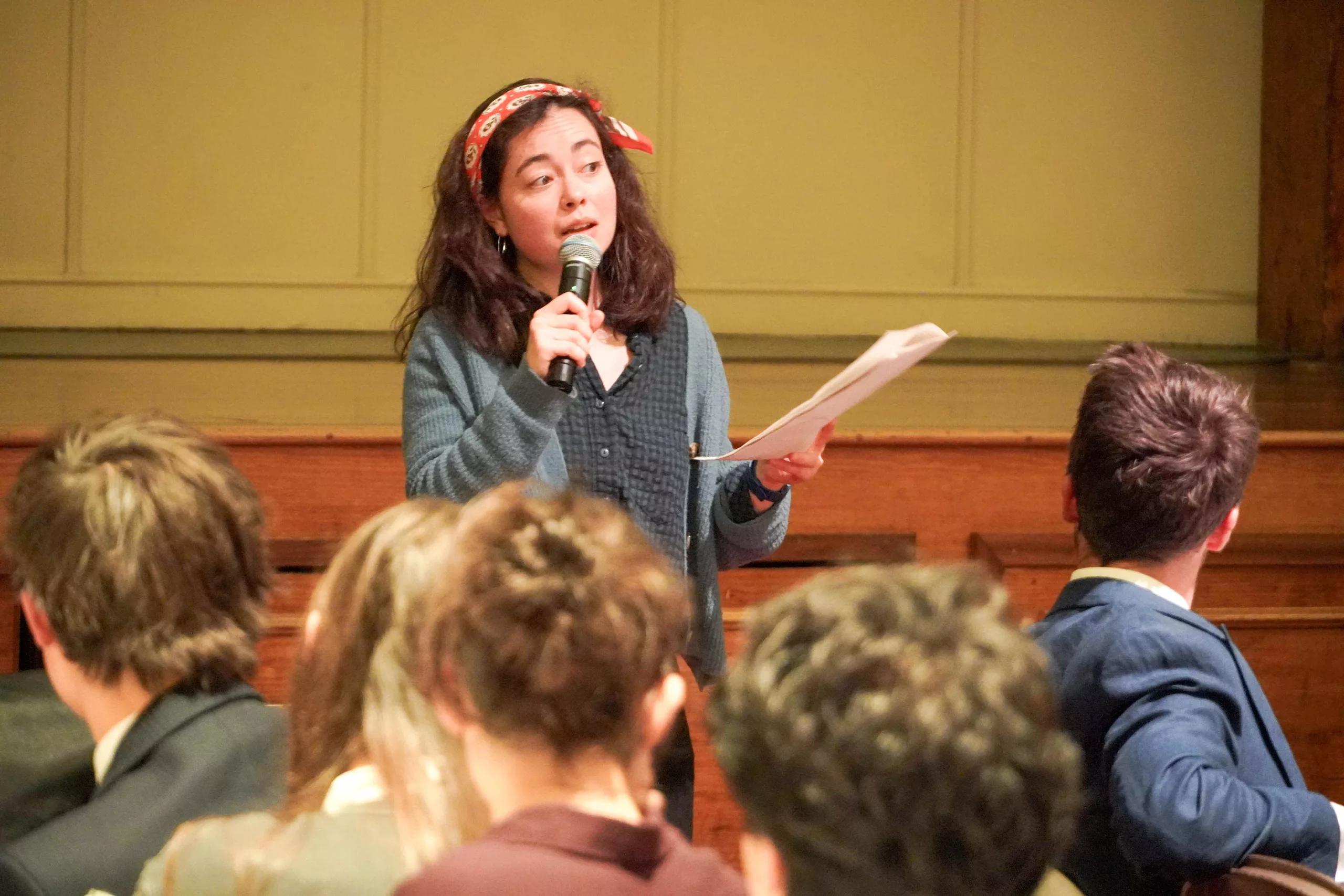
I’d say that 16 years ago, when I attended the School, this ethos was still going strong. Which, I think, was a very good thing. It’s surely what you really want from a school: not to force any one paradigm of how to be on the students, but instead to simply offer opportunities for them to discover what kind of path they might want to take in life.
But what does it really mean though, to find yourself, as A A Milne said the School allowed its pupils to do? It’s a thorny question as of course in the years since he was writing, this question of ‘finding yourself’ has become a billion-dollar industry.
What I found the school did very well in this regard though, was simply to put a huge array of things in front of us that we could learn about, and then give us the time and the space to see if we might take to them.
A clear example was something that in the timetable 16 years was ago called ‘options’. In options, we were, indeed, given many options. It was almost ludicrous. We had the chance to learn about anything from cryptic crosswords, to Latin American cinema, to Wagner’s operas, to stage management. And that’s just what I can remember 16 years later. And it wasn’t just about options periods. This approach of opening doors and windows on the world and seeing which ones we the pupils gravitated towards was present in everything at Westminster, from the enormous library to the ethos behind all the teaching.
A A Milne seems to have had a similar experience. In that same autobiography, he writes about how he decided which subjects to choose for his equivalent, at that time, of options. So about this, he says the following:
“There is a story of a man about to be shot who was asked on the fatal morning if he had any last request to make, any last favour which he would wish to be granted. He said: ‘Well, what about learning the violin?’ In some such spirit, I said, ‘Well, what about learning to sing?’”
He goes on:
“I thought it would be nice to be able to draw. I spent a year drawing a cast of Dante’s head. Little had Dante realised that I was going to do this.”
There’s something familiar in the joyful, almost randomness of Milne’s decisions. And something rather brilliant about that joyful randomness too. After all, as a young teenager, who knows what they’ll be interested in, or enjoy? Who knows what kind of person they’ll be?
Milne is very funny when he writes about these forays into singing and drawing, and I think that’s telling. There’s a joyfulness, a lightness of spirit, to being able to just discover stuff for the sake of it, to really be able to explore like this.
It’s a true privilege. And, arguably, I’d say it’s a similar feeling that puts the wind in the sails of any writer.
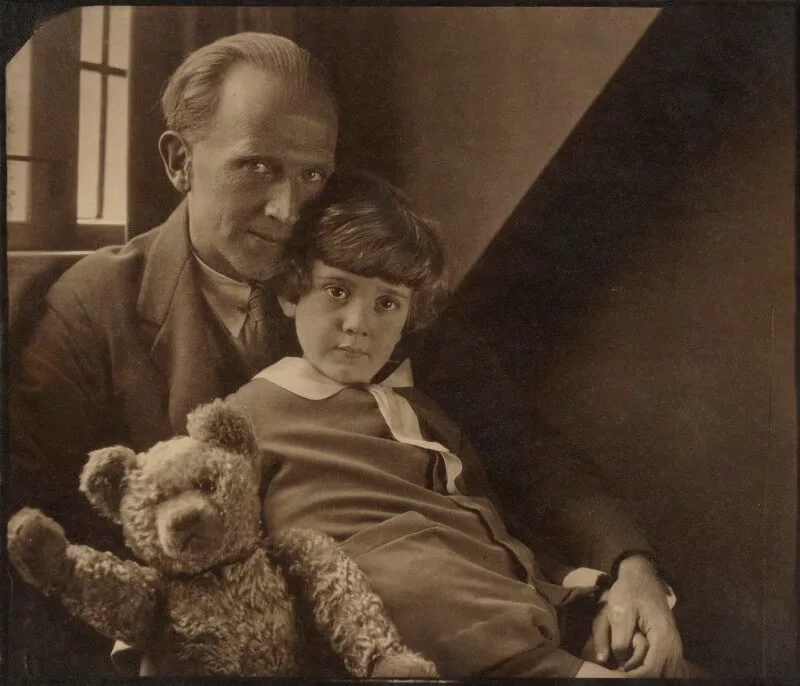
So, though. What does A A Milne actually say about whether his Westminster education actually helped him become a writer?
From the way he way he puts it in his autobiography, being a writer seems to have rather snuck up on him during his time at the School, as opposed to being something he’d been particularly aware of committing to. He doesn’t even seem to have even felt all that directly encouraged in it, and yet still, he was given the time and space to do it, and the intellectual tools he needed to get good at it, though some of those did come from his family life, too. He was also, crucially, given the opportunity of the school magazine in which to publish his work and get feedback from a readership.
By the end of his time at the School, anyway, he’s going to Cambridge expressly for the purpose of doing something very literary – that is, editing a magazine. As he puts it: “My friend… and I stood looking at a copy of The Granta, and suddenly he said, ‘You ought to go to Cambridge and edit that.’ So I said quite firmly, ‘I will.’… So it was to be Cambridge. I didn’t tell father why.”
The way Milne writes about his father and his upbringing, this idea of being a writer by profession certainly isn’t something was raised to, at all. And this is now me veering into total speculation of my own, but I do wonder if this Westminster approach to education, of introducing a vast array of possibilities to see which ones stick, could have allowed Milne to veer off from what he and his family conceived of as likely, or indeed possible, in how to build a life.
Milne himself is circumspect about estimating the school’s influence. He says: “If I am to estimate my dept to Westminster, it is not enough to reckon up my assets and liabilities on leaving. As the landlady suggested when the lodger complained of the fleas, I may have brought them with me. Even if I didn’t, who can say that they were not due to a normal expansion of capital? Seven years at any other school might have left me neither richer nor poorer. Moreover, in the end there remains the constant difficulty of life, the knowing which is asset and which is liability.”
I do admire A A Milne’s appreciation for nuance here, as well as his caution about making sweeping value judgements. And if I may say so, all of that does also seem quite Westminster-like to me.
When it comes to me, however, and the question Mr Morgan asked of me, whether my time at the school influenced my becoming a writer, I can’t help but feel a little more certain about the answer than A A Milne seems to have been.
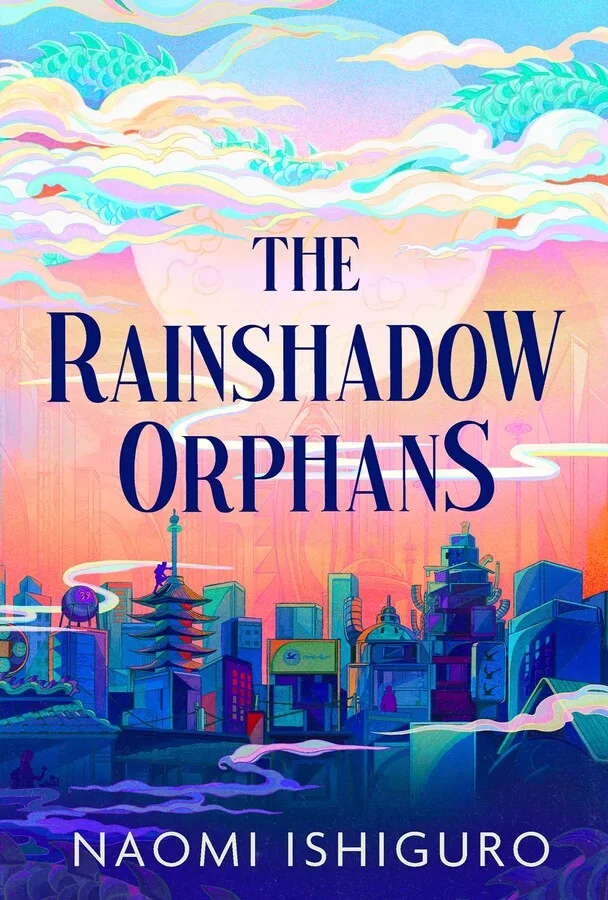
I’ve probably always been a writer, in some way, but I think the truth is that a lot of people are writers in their hearts, and are sadly never given the chance to realise this. Westminster, and indeed Milne’s house, gave me the fresh air, light and water I needed to grow into the writer I always felt I had the potential to be. To the extent that my latest novel, The Rainshadow Orphans, is dedicated to the memory of Chris Barton, the former Head of Drama at the school, who only taught me for two years, but filled them astonishingly full with so many things that would go on to define and guide my life.
At a Milne’s farewell dinner at the end of Remove, Mr Hawken urged us to look back on our years at Westminster as good years, but to be careful not to let them become the best years of our lives. I think this was very wise advice. I think it’s also very much connected to the tendency of the School that I’ve talked about tonight, identified by A A Milne, to simply show its pupils a huge array of possible ways of approaching life and the world, and many different possible avenues to follow.
The resulting expansion in the sense of what might be possible definitely raises the bar in life, and perhaps you can choose – to the extent that we ever get to choose anything in life – whether or not to let that time of immense possibility be your best years, or whether to keep building on the possibilities that you’ve been shown. In my case, and possibly in A A Milne’s, though I wouldn’t want to speak for him, that could be by sitting down to write.
So I suppose this is all a very roundabout way towards expressing my immense gratitude to the School, to Milne’s House, and to the ghost of A A Milne. I’m also grateful to his words about his time the School, for helping me to think more clearly about what exactly there is to be grateful for.
And again, that feels like another very Westminster thing to me – to realise that to simply be grateful in the abstract means little. The really important thing is to consider the nuance of what for, and why.